
02 Poop & bowel tracking
Your poop.
A little less
guesswork.
A poop tracker that keeps the context. Record bowel movements with Bristol stool-form language, using the photo or manual entry options described in Get Regular’s release history.
For iPhone · Part of the Get Regular app

Smooth and soft
A description. Not a verdict.Different records tell different stories.
In the rhythm of your day
One bathroom visit.
Part of a bigger story.
- 01
Describe it.
Use the seven Bristol forms as shared language. Choose manual entry when you prefer not to take a photo.
Bristol form · your choice - 02
Keep the context.
Preserve timing and the details you noticed. A known no-go day is different from a missing entry.
An entry · a no-go day · a gap - 03
Look back.
Revisit your bowel history alongside meals and symptoms, without treating a single type as a diagnosis.
Your routine, over time
The Bristol scale describes appearance and consistency. It cannot tell you why a change happened or measure your whole gut health.
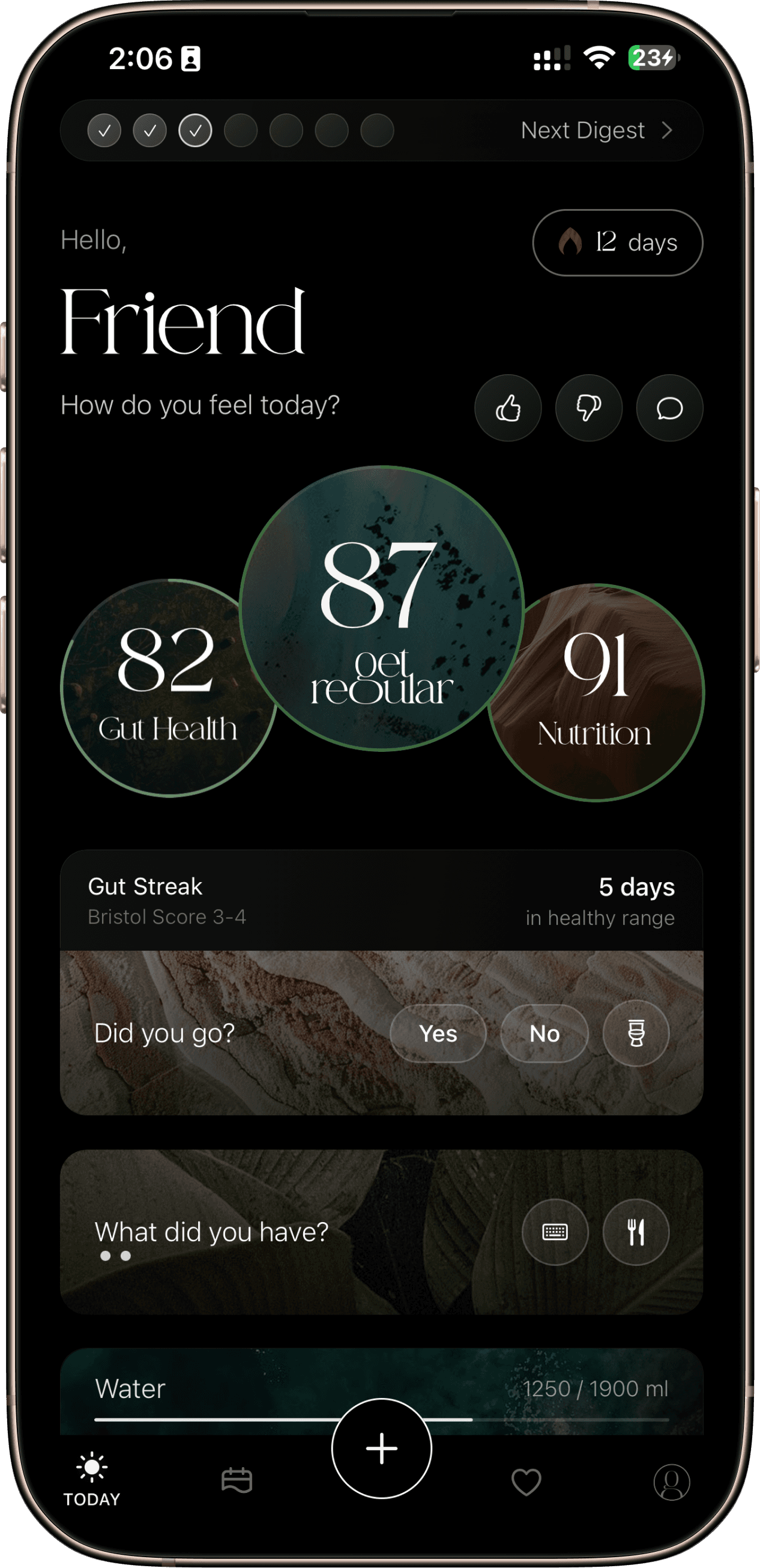 Existing Get Regular product imagery
One app. The whole day.
Give each
observation
some company.
Meals, stool and symptoms live in the same ongoing record. Use your scores, history and AI-assisted insights as ways to look back, rather than a verdict about your health.
See the complete app tourMeet the science behind the storyA closer look
The details,
when you want them.
You do not need a perfect description of your poop. You need a record you can recognize when you look back.
Give stool form a consistent name
Get Regular's listing describes Bristol Stool Scale tracking, with manual entry and photo-assisted features in its version history. The Bristol scale provides shared language for stool form. Its seven types describe appearance and consistency; they do not identify the cause of a change.
Research by Lewis and Heaton examined the relationship between stool form and intestinal transit. That supports the scale as a way to describe an observation. It does not establish the accuracy of an app's photo analysis or validate a proprietary health score.
Build a record around the observation
Record what you can describe confidently rather than choosing the answer you think you should have. The public version history also describes timestamps, no-go day tracking and notes. Check your installed version for the exact controls and entry options.
Keep an unrecorded day separate in your own thinking from a day you know you did not go. Missing information cannot tell you what happened. The same applies to recalled entries: an approximate memory should not become a precise conclusion just because it appears in a chart.
- Use a consistent stool-form description so you can compare your own entries.
- Keep timing and any symptoms you want to discuss alongside the bowel record.
- Record uncertainty when an observation is incomplete or hard to classify.
- Choose manual entry when you prefer not to upload a photo.
A small record can say more than a perfect streak
Illustrative example — fictional notes, not real user data or a generated app report. The useful detail is the difference between an observed event, a known no-go day and a day with no entry.
| Day | Record | Context to preserve |
|---|---|---|
| Monday | Bristol type 4, around 8 am | No other details recorded. |
| Tuesday | Known no-go day | Travel day; this is different from forgetting to log. |
| Wednesday | Bristol type 2, around 9:30 am | A note says straining; no explanation of the cause is established. |
| Thursday | No entry | Unknown. Do not count this as a no-go day or a symptom-free day. |
Look back without turning a type into a verdict
A diary can help you describe a changing routine more clearly than memory alone. A single stool type, a streak or an app score cannot establish whether you have a digestive condition. Nor can a photo replace the history, examination or tests that may be needed to understand a symptom.
For a healthcare conversation, the useful question may be what changed, when it changed and what else you noticed. Bring those observations rather than relying only on a score. Get Regular is a tracking aid, not a diagnostic test.
Photo choices also involve health information. Read the full privacy policy before uploading images; the app's manual entry option provides an alternative described in the public listing. Our Bristol guide explains the language of the scale without asking you to treat a type as a diagnosis.
Before you start
Good questions.
Do I need to take a poop photo?
The public version history describes manual Bristol type entry with no photo required. Use the option you are comfortable with and check your installed version for its current controls.
What if a bowel movement is hard to classify?
Keep the uncertainty in your description rather than treating the closest type as a precise measurement. A photo suggestion can also be wrong. The scale is a way to describe stool form, not a diagnosis.
Can I record a day when I did not go?
The release history describes no-go day tracking. A known no-go day is different from an unrecorded day; keep that distinction when you review your history.
Does the app have fields for color, blood, mucus or urgency?
Dedicated controls for all of these details have not been verified here. Record important observations in a form you can explain to a healthcare professional, and do not rely on an app field or score to decide whether a symptom needs care.
Try a starting point
Explore the Bristol stool chart
See all seven forms and find the words for what you notice.
Product information & sources
Feature descriptions follow the public listing and version history checked on 20 October 2026. Controls and access can vary by version and offer. Illustrations are labeled; they are not real user records or clinical results.